As a long time comic book fan, I of course played many a superhero TTRPG, including TSR’s Marvel Superheroes (at least 2 editions), DC Heroes (multiple editions), Heroes Unlimited, Villains & Vigilantes, GURPS Supers (okay, technically never played it but it’s a great sourcebook, like many other GURPS sourcebooks), Super World, Mutants & Masterminds (2nd Ed. and backing an upcoming edition), and of course several editions of Champions (including the brief Fuzion that crossed over with the R. Talsorian Games d10+stat+skill mechanics). From way back there was a term we used – Power Stunt.
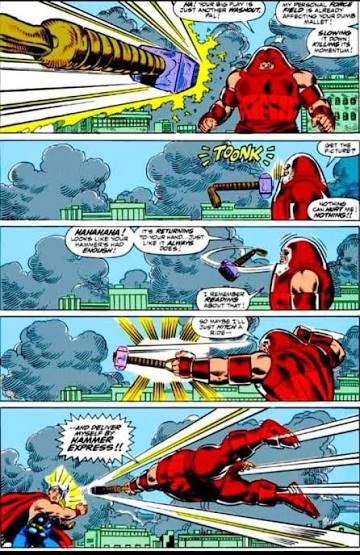
Put simply, a power stunt was using your particular power to do something it was not intended to do. Where some games were highly specific – if you didn’t pay points for it, don’t expect to be able to use it that way – others were more freewheeling. According to a little digging, we must have picked it up from the clunky beast that was Marvel Superheroes a.k.a. Marvel FASERIP and there was indeed a mechanic for it. Simply describe how you wanted to use the power for an unusual effect, pay 100 karma (the unit used for improving characters, influence dice rolls, penalize “heroes” for being unheroic, and doing cool stuff like power stunts) and roll the dice. Depending on how many times that character had succeeded in a particular stunt before determined what quality of result was required to do it again, meaning over time it would become part of the repertoire. With later editions (and particularly the Ultimate Powers Handbook), power descriptions got more detailed about what they could and could not do but never underestimate the creativity and cunning of that player sitting across the table from you!
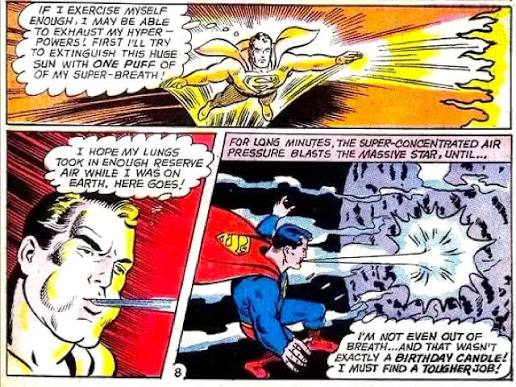
So naturally we ported the concept over to other games when we could, usually using a ‘push’ mechanic already found in the game, and in some cases allowing for skill levels in Power Manipulation for power stunting, again often attaching a resource spent to do it (Champions was way less punishing as we just used the pre-existing characteristic of endurance that was already being used). Silver Age Superman was notorious for power stunts, like using his super strength to create diamonds from coal, heat vision to shave, super speed to travel through time, and super breath for everything from inhaling deadly chemical clouds to producing freezing temperatures.
What only recently occurred to me was just how Old School this was. It’s the same imagination that comes up when weaponizing bags of holding or suggesting that a low level Create Water can become an instant kill spell by targeting a creature’s lungs. The Light spell in Dungeons & Dragons has gone from a utility spell to an offensive blinding attack (usually a 2nd level effect) with the mechanics spelled out in Basic, Advanced, and 2E but by the very crunchy 3rd Edition this blinding effect was taken out. 3rd and 4th Editions were by far the most detailed in the crunch and rules lawyering of each line of spell or feat description would stretch many a logical argument to the extreme.

(based on a true story of a fireball cast at an illusionary target in a side room and our party in the 10 x 10 corridor, calculated out as it was pointed out that the party needed to make some saves or else all those soft metal coins of gold and silver would melt to slag and the combustible objects we were carrying would ignite – ah, those were the days!)
5E Dungeons & Dragons has done a lot towards cleaning up these messy innovations with clarifications like “does it affect only creatures” and “if cast on a living creature” (leading to a few creative solutions in classifying dead bodies as objects and not creatures), but it hasn’t stopped the video shorts on how to get a 32 AC at level 1 and the like. Once a spell has been used in such a creative fashion, it creates a precedent, one that most players will push as far as they can for as long as they are allowed to.
For 5E, we started using the Arcana proficiency as the roll, using a DC 10+spell slot level to make it happen. It did mean that non intelligence casters were less capable of spell stunting, leading to the discussion as to should be it a class appropriate proficiency like Religion for clerics and Musical Instrument for bards or just have them roll a d20 + spell attack versus the DC. Honestly, the DC felt too low to start, so it was suggested go with 10+double the spell slot level but that felt too high. There was a lot of viable solutions but it varied from table to table.
As I’m currently running a Shadowdark game, creative solutions are encouraged and the spells themselves have a very tight word count that leaves some room for trying wacky things. Considering that it could be tried multiple times without the loss of spell slots (except for on a failed roll), it could end up becoming a very unique signature spell based on what sort of strange spell stunts get successfully cast with it. My thoughts for when it inevitably comes up, the first time it gets used in a non-standard way that make it more useful than it ought to be, bump the difficulty by one step (+3), not unlike a called shot for special effect. It feels like a Downtime activity could be spent to remove that increased difficulty, thus building up the signature spell, but it’s something we haven’t done yet at the table.
Dungeon Crawl Classics and AGE have their own stunt mechanics but neither feel quite right for spellcasting but I do like how they sound on paper for creating interesting fight complexity beyond the swinging of swords and the erasing of hit points.
Discover more from A Geek for All Seasons
Subscribe to get the latest posts sent to your email.
 A Geek for All Seasons