I’ve been following the Mythos since I was a teenager.
I read the short stories, played the TTRPG, and even picked up the original Arkham Horror (basically Candyland with eldritch horrors roaming the neighbourhood). Over the years I’ve seen the proliferation across movies, books, and games (including the Smash Up: Obligatory Cthulhu Set), more than I could keep up with. Some were little more than a system with tentacles slapped on them, but some captured that feel beautifully. I’d say Cthulhu: Death May Die is one of the better ones that I’ve played.
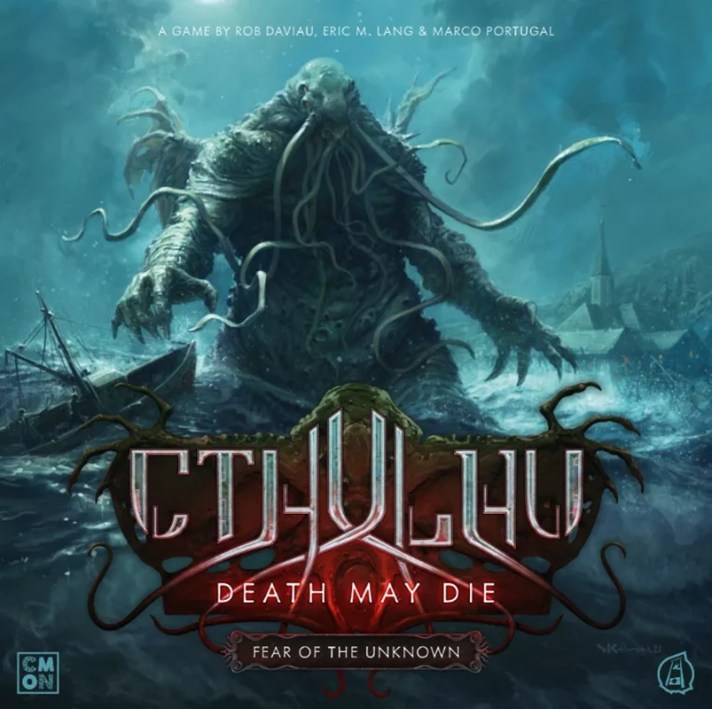
So far I’ve only played some of Season 1 and Season 3 but I’ve enjoyed it so far and expect to be playing again several more times.
What’s the Pitch?
You play investigators rushing to disrupt an eldritch ritual and dispell the avatars of the Great Old Ones before time runs out, madness takes hold, or death take you (and not always in that order). Not all is lost, for your investigation will uncover unexpected allies and items to aid you in your struggle. Even as your sanity crumbles, it unlocks new strengths to fight cultists and monsters and worse!
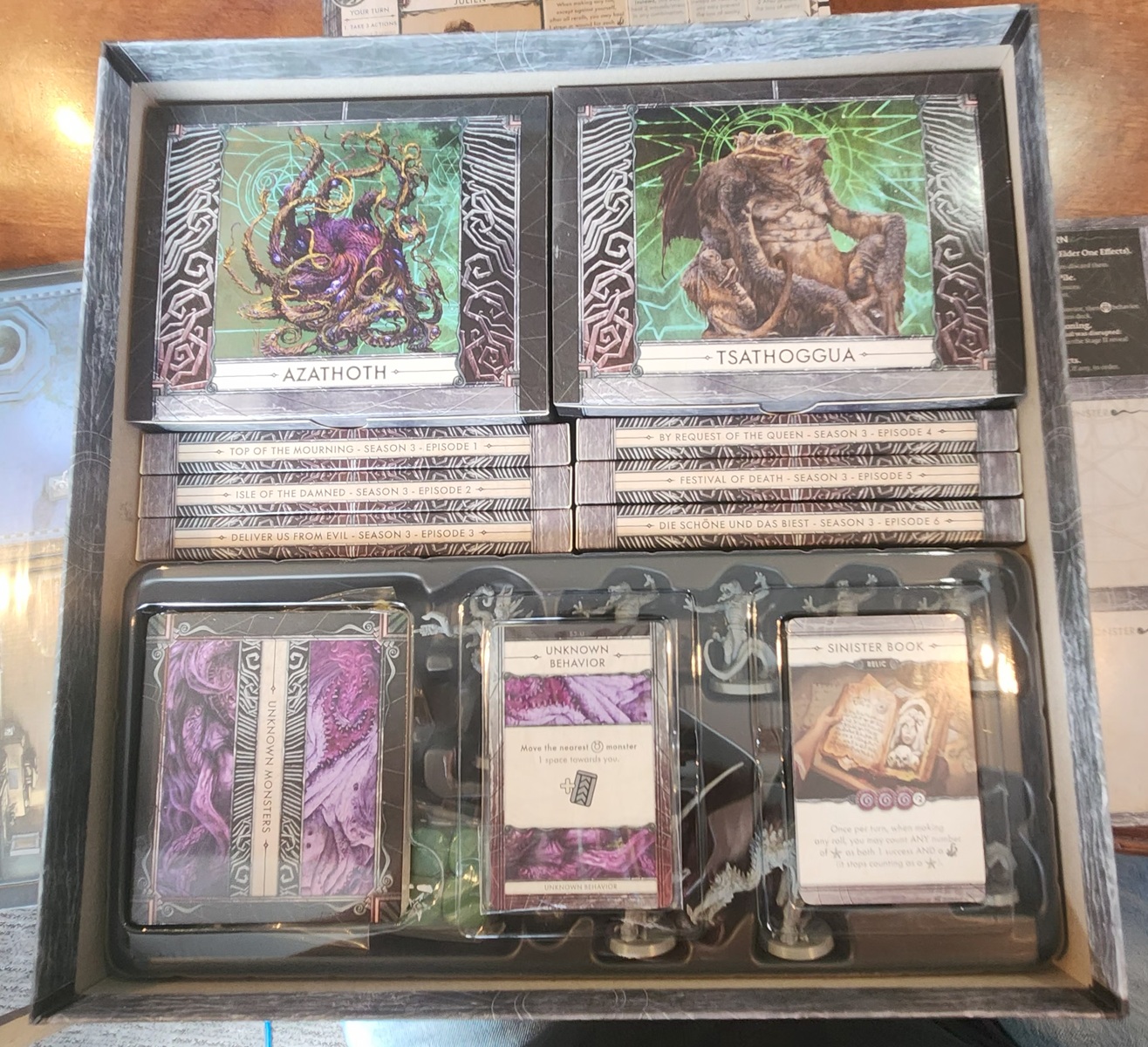
Each player character has three abilities, two common (like brawling, toughness, marksmanship, stealth, arcane mastery, swiftness) and one unique (unkillable, protector, healing prayer, and more). The box sets comes with six episodes and two Great Old Ones so there are at least twelve plays plus more if you wish to swap in Great Old Ones from other sets. The room tiles are plentiful and have lots of ways to configure them without it feeling like it’s the same dungeon from a different angle (looking at you Dragon Age II). Plus, each box set a.k.a. season can be used with investigators and enemies from other sets.
Things I Liked
- Co-operative with up to 5 players
My regular table usually has more than four so this has become part of what I look for in a game.
- Big chunky figures and storage
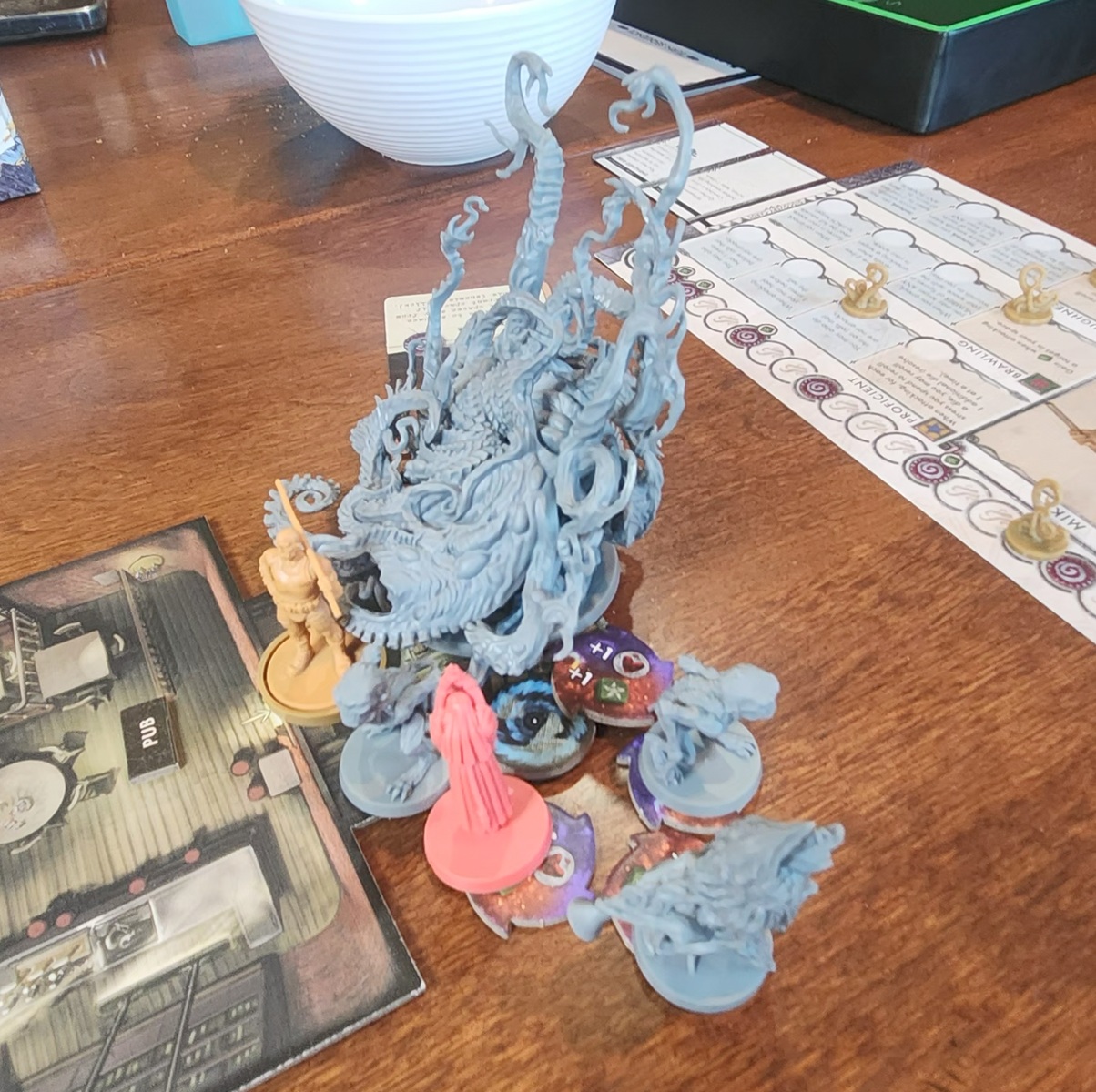
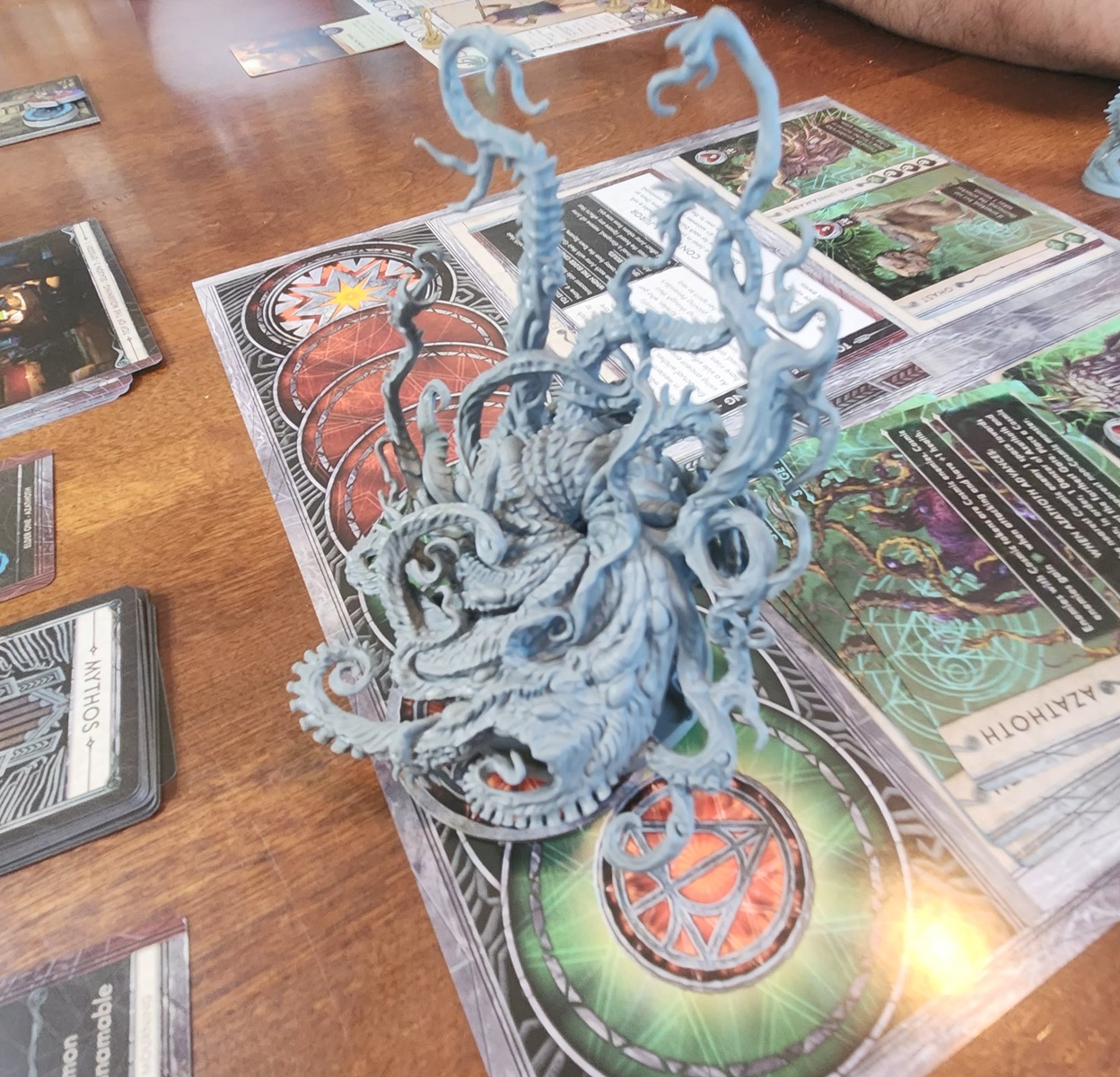
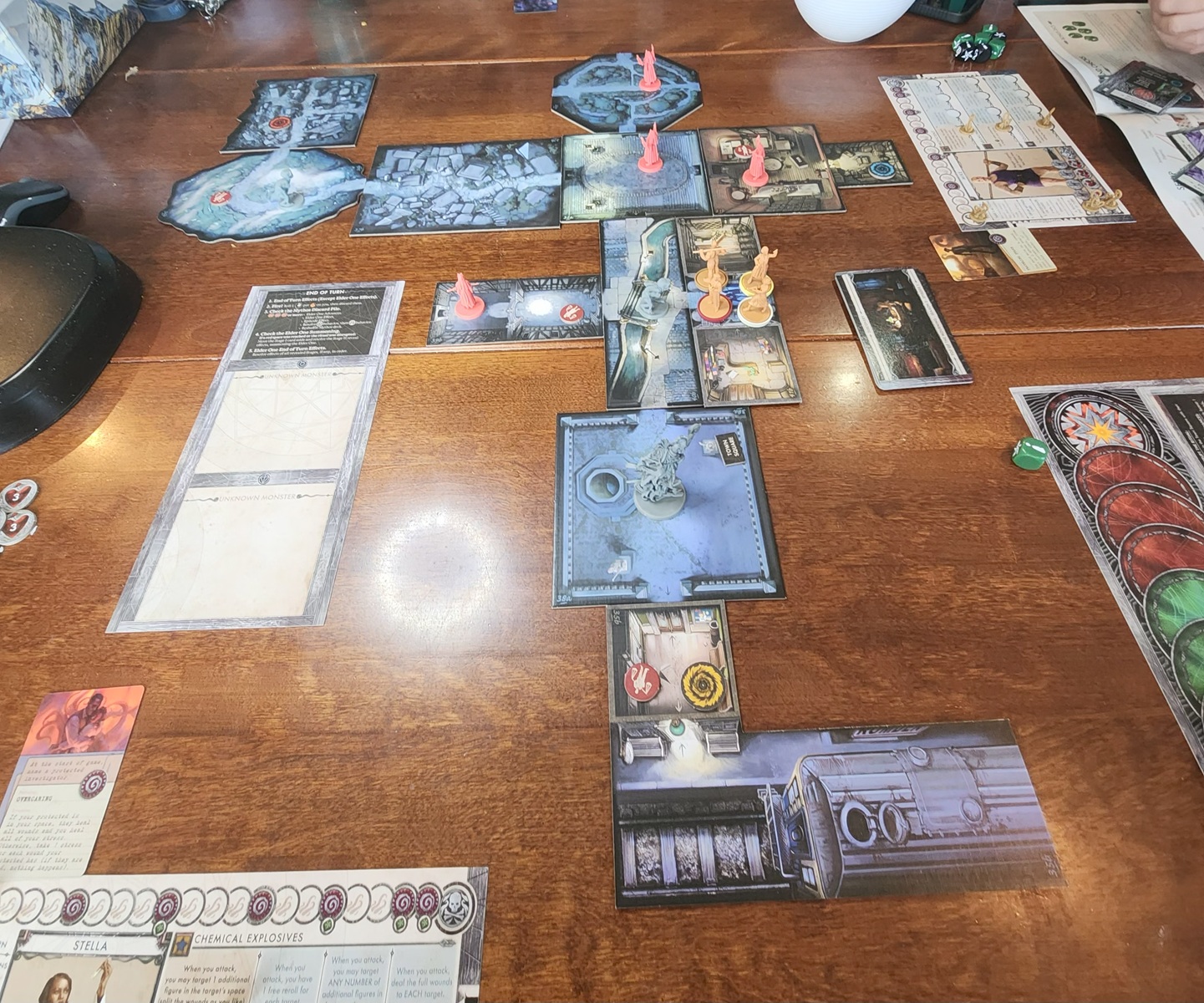
These look great! The pieces are colour coded (tan for investigators, red for cultists, gray for eldtritch) and the storage is decent. Coloured rings fit around the investigator figs so you can choose your favourite colour to play. The figs are fairly distinctive with their prop (test tube, hacksaw, pistol, etc.) and there are ten to choose from with each box set. The red cultists come in a couple of different poses. Finally, the Great Old One is appropriately massive compared to puny investigators.
- Escalation!
Like the traditional Cthulhu TTRPGs, it’s a game of diminishing resources. C:DMD levels this out a little with a rest action for some recovery in a safe space if you can find it. Meanwhile, the character’s sanity track only goes down. While it dwindles, you get to improve your character’s starting abilities and even gain extra dice for combat. The first couple of games I played, it felt like we were one the razor’s edge between overwhelming odds and PC improvements, the closer to permanent madness you got came with greatly improved abilities.
- Rerolls
I’m not always the luckiest of dice rollers out there. The specialized dice make sense, three base black dice can be blank, success, madness, arcane success (for those with a special ability), madness (tentacles for the loss of sanity), and combinations of sucess with madness. The green bonus dice don’t come with madness, so usually to your advantage to reroll for blanks (though early on, trying to lose some sanity so as to bump abilties isn’t uncommon). Many abilities come with rerolls for improvements and you can spend your limited stress for rerolls. It doesn’t always pan out, but it’s nice to have the option, especially when you can apply it to the rolls of enemies against you.
- Accessibility
Despite the size of the box and the number of moving parts, the game is pretty simple with most of it’s mechanics. Turn sequence is detailed on the character boards; take three actions, resolve a mythos card, investigate (find stuff) or fight (if in a room with an enemy), resolve end of turn events like being on fire or effects of the Great Old One. There were still some rules we got wrong the first couple of times, but there are a number of useful FAQs out there (thank you Board Game Geek! in particular) for clarifications. Also useful, each box set was stand alone so it wasn’t required to start with the first box before jumping into the second one. Even the individual episodes (so far as I’ve seen) only had narrative connection between them, allowing for easy replay of favourite episodes without having to back track or reset characters like a standard legacy game. It does mean that these is no benefit to completing episdoes 1 – 5 before diving into episode 6 but that’s fine by me – I’ve got enough legacy games to scratch that itch.
Other Stuff
- Lack of Harvey Walters and other Good Friends
Certain character names have continued to appear across multiple Mythos games, like Harvey Walters as the example NPC in every edition of Call of Cthulhu TTRPG (Chaosism), Arkham Horror (1st & 2nd ed), Eldritch Horror. Monterey Jack (an Indiana Jones pastiche) remains a favourite of mine and I gleefully used them as a source of lore in a game I ran. From what I’ve seen of the CDMD investigator names, it’s completely new content, which isn’t a a bad thing. They still use classic archtypes like grizzled war veteran, shotgun weilding dillitante, tough private investigator, daring relic hunter, knowledgeable professor, and some very unique ones like wild-eyed unkillable arcanist and gate manipulating kid.
- Boxes for Card Storage
The cards came wrapped, but considering just how much packaging was included for the figures, it’s surprising that there weren’t any boxes for the various cards. I’ve got extra rubber bands and managed to find some space in the box for them, so a minor thing.
- Clarity of Graphics
The player boards are great (though I have had the tokens marking progress knocked aside a couple of times), including the actions to take and the steps to each turn. The tiles are very pretty but sometimes it is difficult to tell when a tile is one or more rooms. Again, not a big thing and there are small arrows you can see with looking closer, but for my declining eyesight looking across the table, not always the easiest. With time, I expect I’ll get to recognize certain tiles. Upside – certain scenarios have named rooms and include cardboard markers to identify them like ballroom and catacombs.
- Financial Woes
Not about the game, but the company that makes it was one of the ones that got hit hard by the current tariff situation and being committed to several kickstarter campaigns. Bottom line, the company might be going under and has been reported as selling off some of it’s IP and game lines, so we may or may not get the promised Season 4 with Nyarlothotep and who knows what might get rereleased from the other expansions and core boxes in the future …
Games I’m Reminded Of
- Mansions of Madness
Mythos, rearrangable map tiles, and scenarios with decision trees that create different experiences for replay. Also has an app for running the game that allows it to be played without one player being the Game Master.
- Gloomhaven / Frosthaven
The height of legacy campaign board games, with improvable player characters and opportunities to unlock more. It has lots of sturdy pieces for cardboard minis, mape tiles, conditions, and a card system that drives the enemy actions.
- Heroquest
The grandparent of so many boardgames like Descent and Gloomhaven. Recently re-released in a shiny new version. Solid plastic minis for heroes and monsters, a single board that gets reused by placing doors in different places and scenarios blocking off rooms. Descent didn’t make this list as that one requires someone to run the game.
#New to my table #8 for 2025
Discover more from A Geek for All Seasons
Subscribe to get the latest posts sent to your email.


One thought on “Playing – Cthulhu: Death May Die”