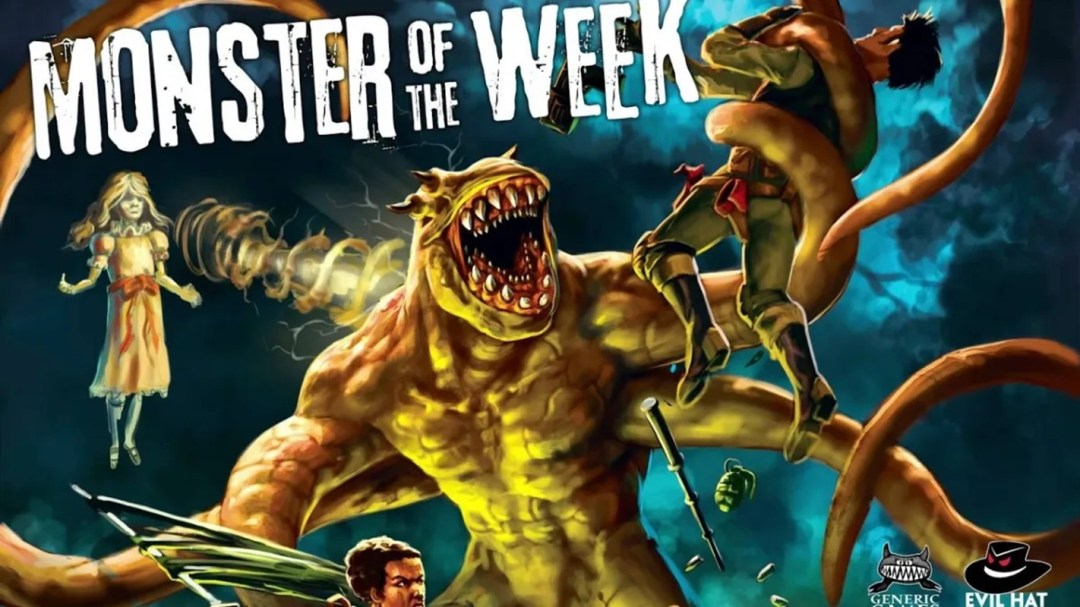
TLDR – Ran Monster of the Week and much fun was had we leaned heavy into ALL THE TROPES you’d expect with a game name like that.
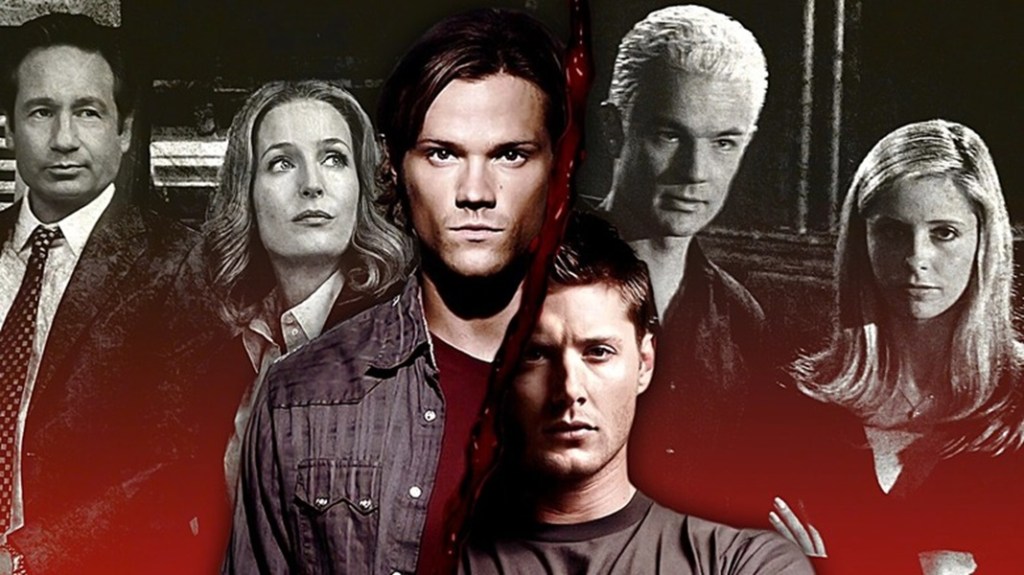
My regular Saturday night gaming table was down a few folks so I asked if I could bring a New Game One Shot to the table. One of our table was a big fan of Supernatural, X-Files and other shows in the genre so I was determined that we had to play Monster of the Week, a Powered by the Apocalypse game.
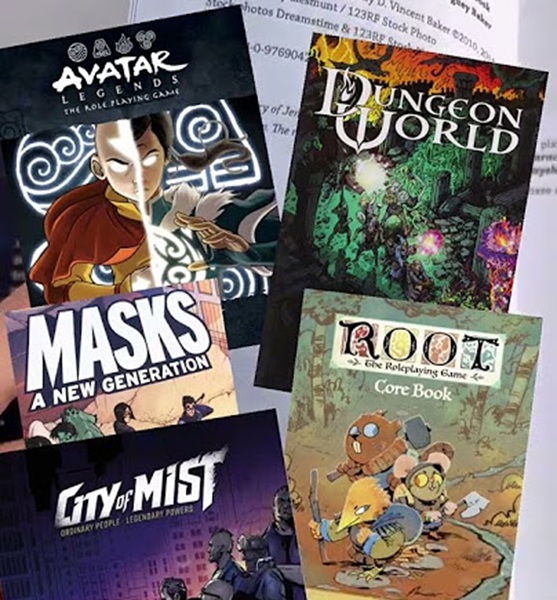
We had some experience with Root The RPG, Avatar the Last Airbender RPG, and even play tested the as yet unpublished Tomb Raider: Shadows of Truth so the basic mechanics were familiar. Each player chooses a playbook of moves. While all player character can do actions like Kick Some Ass and Act Under Pressure and so on, only the Spooky playbook can Hex. Stats aren’t rolled but are instead chosen as an array of -1s, +1, and +2 that get added as appropriate to a 2d6 roll.
Honestly, just trying to identify what TV series or movie a playbook was based on provided a great amount of entertainment on it’s own, like The Chosen (Buffy the Vampire Slayer) or the Monstrous (Teen Wolf or many a vampire series) and so on. Likewise the game has the option for a team playbook like Agents in Black (Men in Black) and Mystery Club (Scooby Doo) and the International Monster and Paranormal group (Hellboy and the B.P.R.D) but we kept it simple but as per the game the PC’s are assumed to know each other and are the heroes of an ongoing series. Our table decided that they were college students and a coach / professor.
Powered by the Apocalypse games are great for this sort of narrative development, such as making it part of character creation for players to look at a list of backstory connections used to link their PC’s together. Our table was pretty big so we just did two connections for each PC.
We also talked about if we would set things in the modern 2020s or do a retro ‘period’ 80s / 90s game as many of these shows started in. With great joy, the table agreed to try 80s, a great option in my humble opinion with media like Stranger Things and TTRPGs like Kids on Bikes and even comic book turned tv series Paper Girls. Thus as part of character introduction we had the additional question of what their 80s connection was, getting answers like a neon coloured windbreaker, kangaroo high tops, ripped denim jackets, and a google search to discover if Air Jordan’s were a thing yet in 1988 (they weren’t). As happens often in Call of Cthulhu, there were many times players consulted the internet on their phones to determine in period details. We also did a little brainstorming on putting together an 80s appropriate soundtrack, though only for the Final Climatic Encounter did we play one – Final Countdown, a classic anytime!
I pulled Creature Feature from MotW: Tome of Mysteries (it’s about 5 pages in length and most of the other mysteries in the book are similar), tinkered briefly with it but kept in mind one of the PbtA directives – don’t over prep, just set up situations and let the story tell itself. I did sit down and do a quick “what are three scenes that are likely to come up and what would they look like” as per Sly Flourish – the Lazy DM, a font of excellent information, but otherwise let the players choose how they wanted to engage the scenario. When things started to bog down, I pressed the accelerator a little, did a soft move (reveal threat, wreck something, etc.) and advanced the clock to the next stage of the provided timeline. We went big for a cinematic final scene as the Big Bad Boss was confronted and each player shared an element for the wrap up, describing the celebratory breakfast at the diner, still splattered with the residue of the Big Bad.
My players really liked the simplicity of the system, though sometimes as Game Master it was a struggle to try and make some of the results fit the narrative like the outcomes for a successful Investigate a Mystery move that are great for figuring out the motivations and weaknesses of a monster but not the greatest for figuring out the secrets of the creepy mists. That being said, I’ve got a copy of these questions (as well as Figure Someone Out from another PbtA game) as prompts for when I run D&D and players use Perception, Investigate, and Insight as a great framework for what they can learn with those skills.
I did have two other struggles. First, the Use Magic move to which the GM could add an additional requirement but based on what the player wanted to use it for some options didn’t fit the narrative like taking an additional 10 minutes or requiring multiple people to perform the move. For the most part, I just went with the simplest requirement like an arcane object or drawing of an arcane symbol. I did like how it worked with the Initiate playbook, the trained warrior of an ancient order dedicated to combating the supernatural as the move itself is set up as build it yourself with a range of effects and potential glitches.
Secondly, the action economy is so different from the usual d20 style game. We used a couple of different approaches based upon the scene. We did some by going around in a circle so that everyone got a chance to do something, and a popcorn variant of just switching the spotlight to players who hadn’t spoken up recently. For the big final battle we tried starting with one player to state their intent and pass to another player until everyone had gone and then resolving the moves accordingly (feedback was actually pretty good for this one for the first round as they confronted the Big Bad Boss). We also did something similar where players took a few moments to discuss what each of them wanted to do and plan how they would work together, then resolved in popcorn of passing to the PC who wanted to act next. That final version is one that I think I will try to use more often for future on narrative games like this.
The other aspect of Kick Some Ass that I found ran counter to the narrative was that for every PC that engaged the Boss was taking harm as a product of their fighting, even if one was shooting with a sniper rifle (though that might be better resolved by Act Under Pressure). It also means if four PC’s are Kicking Some Ass, then four of them are likely to take harm. This is something I need to work with a bit more to build up my improv skills and look for some actual plays to see how others handle it.
Finally, the XP / Level up is interesting. There are ways specific to playbooks and actions (like allowing yourself to be Manipulated by another PC) to gain XP. You also get an XP for rolling a fail of 6 or less. We had one player who levelled up halfway through the session. We had another player who only got XP from the final Mystery Resolved questions (up to 2 XP) as he was rolling hot and didn’t take any moves that got XP. For a one shot, I think that works well and as a player I have a fondness for mechanics that reward failure.
Overall, the table said that they would be willing to play again and every time I run a Powered by the Apocalypse and Forged in the Dark, I believe it strengthens me running those games and makes me a better GM for other games. I also was able to throw this together in less than 2 hours of reviewing rules and printing off handouts which is amazing for an over prepper like myself.
When I do run this again as a one shot, I will be adjusting the Luck available to the PC’s. As a resource, it can be used to reduce harm from a single source to 0 or to turn a failed roll into a full success so it’s pretty powerful. With 7 points each, they spent it pretty freely as we approached the endgame as this was a one shot. Normally it’s non-renewable (at best, XP can be spent to get one more point of Luck – ever!) so each one would be very precious. As a one shot, it gave them a taste for it and they could play a little more fast and loose but I’m looking at halving it to 3 or 4 next time.
- 5th TTRPG – Playing Non D&D Games for 2026
- 4th New To Me TTRPG for 2026
Discover more from A Geek for All Seasons
Subscribe to get the latest posts sent to your email.

