A little while, I was watching a Sly Flourish video and he talked about making a little “Lessons Learned in Gaming” diary as a resource for future inspiration and a means of reflection. I did something like that with a little bit celebrating something about the session (and later discovered Stars and Wishes) and pondering what went well and what did I need to work on for the next game, so this felt like a natural progression with a bit more of a recurring check in. Some weeks are definitely more reflective than others so far …
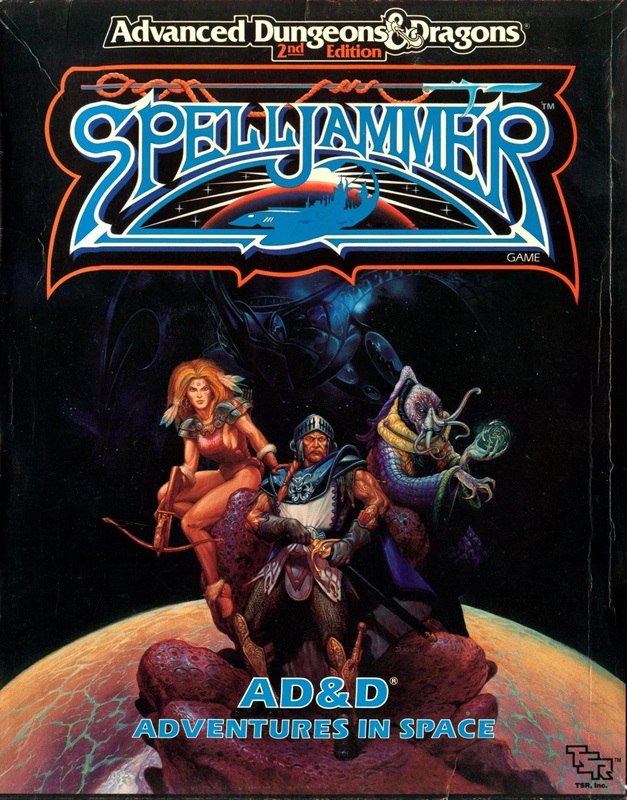
A friend wanted to run a D&D game, choosing from two classic campaign settings – Planescape (fantasy multiverse of madness) or Spelljammer (fantasy space pirates). Both had received a recent 5E retreatment, and not the best I’d have to say so my friend wanted to draw a great deal from the original resources. Spelljammer won out as the choice so I leaned hard into it, choosing a race unique to the setting (plasmoid) with a setting specific background (wild spacer) and though a standard PHB class and specialty (cleric with light domain), at least it was a deity of the stars (Celestian the Wanderer).
Things Learned / Things Practiced
It had been a while since my last session zero and this one was with a group mostly of people I hadn’t played with before and one I had only gamed with for Cyberpunk briefly. What I was struck by was the importance of basic expectations and house rules.
- Etiquette: Who is responsible for bringing what foods / drinks and what would be appropriate?
- Effects of Crits & Misses: Not all tables do Nat 20 / Nat 1 the same.
- “Bennies”: D&D 5E has had a couple of rules for those benefit rolls, like rerolls or rolling at advantage or imposing disadvantage on an enemy. How do you get them, how many is maximum, and what can you make happen when you spend them?
- Combat quirks: Again, there is room for some interpretation and some room for players who say “I hate that, it’s dumb, why would we ever do that”. It might be something simple like how many weapons can you draw in a turn (if I’m throwing knives and have multiple attacks but 5E 2014 says only one weapon can be drawn a turn, is drawing the knife part of the attack action?). I had never heard of someone running initiative where enemies defaulted to 7.5 every turn but there it was.
- Hit Points: I’ve been encountering tables where the player and the DM roll for hit points, then the player decides take the one they rolled or take the unknown quantity rolled by the DM. Some offer roll but take the minimum of half (round up). In my recent very epic Tyranny of Dragons (titled “Shadows of the Dragon Queen” long before the Dragonlance campaign book came out for 5E) we just took maximum each level.
- Restricted Bits: Alignment (I have no love of Chaotic Neutral or Chaotic Evil at my table usually, though I have played a CN successfully before without self destructing the party), forbidden spell lists (Strixhaven has no place at my table currently, too divergent from settings I use), race / species (often for setting reasons), and so on …
I had started a list of recurring house rules I had used but this table had some things new to me, even if we didn’t wind up using them, you never know what’s going to fit your table later on.
Emerging Questions
- How would space maps differ from regular fantasy maps?
- What is the social / family structure of an amorphous humanoid blob?
- How well was 2nd Ed. ship battle rules going to mesh with 5E ship battles?
Some of this ought to be fodder for another blog entry all on their own, but some quick thoughts that I jotted down as I continue to work on writing shorter and more constrained posts.
Discover more from A Geek for All Seasons
Subscribe to get the latest posts sent to your email.
 A Geek for All Seasons