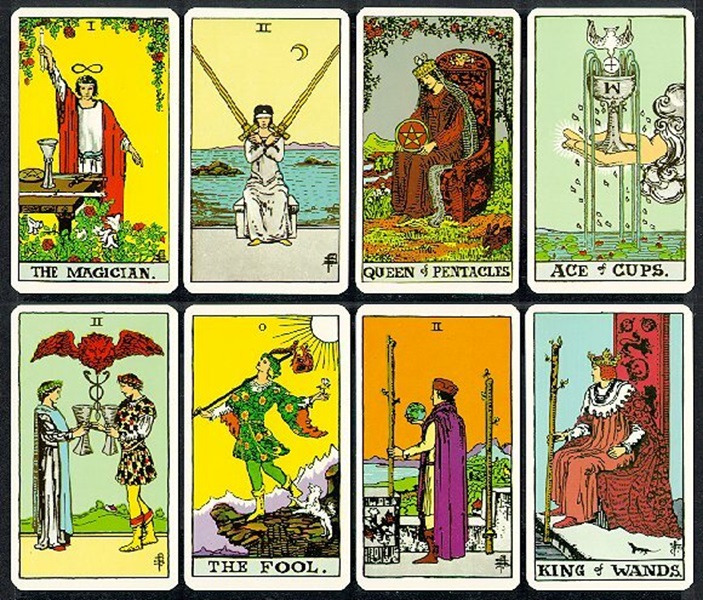
Continuing on with some experience and brainstorming on using cards in game play. Buckle in, there’s a bit of a prologue to this. Skip down to the Mechanics if the backstory gets to be too much.
Narrative Twists vs. Random Dice
A buddy of mine ran an awesome campaign using the Amber TTRPG, based on the series by Roger Zelazny. The TLDR – there is an ultimate reality from which all other realities are but shadows, and it is called Amber. Problem is that Amber is ruled by an extremely dysfunctional and Machiavellian family of demi-gods who are able to manipulate shadow for they are attuned to the Pattern that defines all these shadow worlds. I enjoyed the series but really didn’t like the main character. In a similar vein of royal intrigue and parallel worlds, let me recommend A Well Favored Man by Elizabeth Willey, which I found the characters to be less godlike and better developed.

More importantly, my buddy poured so much into running this game, including using a tarot deck as part of the action resolution method. Action resolution in Amber is based on four stats – strength, endurance, psyche, and warfare. The players engage in a secret bidding war to determine where they are relative to each other. Each stat is explained as being the most important. Needless to say, the game encourages antagonism as that’s how the characters largely interact in the book. Then the finer points – Prince Corwin may be better at warfare and outfight his brother Prince Gerard, but as Gerard points out – he need but lay his hands on Corwin once and his strength will do the rest, so it becomes about approach and narrative advantages as there are no dice to act as randomizers. Keep in mind that this was released in 1991, when RPGs consisted mostly of percentile skill based (Call of Cthulhu, Runequest, Warhammer Fantasy RPG, Middle Earth RPG, Star Trek), d20 (Advanced D&D 2nd Ed. was still pretty shiney and hadn’t even hit it’s big overhaul yet), and rolling big fistfuls of d6s (Star Wars, Tunnels & Trolls, Shadowrun) or d10s (Vampire the Masquerade). White Wolf Publishing was the one that really sunk it’s teeth into style over substance and narrative as the driving force of gaming but it still boiled down into rolling big numbers with a pile of d10s while being edgy and tormented. For Amber, a higher stat would beat a lower one. Always. Unless you cheated and switched to something else that gave you the edge.
This is where my buddy saw problems but didn’t want it to be just another fist full of dice game. What he did was deal out cards to the players that could be used when they saw fit to tip things slightly in their favor. Further, he set up a universal ranking system that everyone, including the elders and NPCs and the Amberite offspring (the primary PCs) could be compared to. He did a lot of other mechanical work to fill other bits, but right now we’re gonna focus on the cards.
The Mechanics
At appropriate times, a player would play one or more cards. If it was a numbered card (face cards counting as 12, 14, 16, and 18 for Page through King), it would add it’s value directly to the stat being used and the result compared to the opposing value. If it was a suit directly related to the stat being used, the value was doubled (spears – psyche, shields – strength, cups – endurance, swords – warfare). The major arcana could be used for the numeric value OR it could be used for a narrative purpose using the card’s descriptor. To avoid heated arguments, he put together a guide with a brief write up for the descriptors, derived from the usual interpretations plus a few connected directly to campagin specific characters, places, and objects. Also see concepts like Storypath Cards or Drama Deck (TORG, FATE, and Savage Worlds have had decks like this as well).
An example that stuck with me was the Chariot card. The descriptor was
- Effect – triumph, victory, quick passage through Shadow, progress
- Reverse – a plan foiled, loss of focus or confidence, leadership undermined, greed
We must have seen it get used at least three times over the campaign. It got used as a perfect getaway once, another time to undermine the efforts of a rival, and once more as a victory (at a cost though for a price had to be paid to overcome that particular challenge).
For some degree of balance, we filled our hands to three cards dealt at the beginning of a chapter and had to discard all but one at the end. For a significant chapter, we could fill our hand up to five and usually we needed as much help as we could for those. The GM also got a hand of cards, 2 more than the players did but they were used for all the NPCs. There was a luck mechanic in the game which we could use for redrawing a number of cards (or in the case of bad luck, giving up the highest value card).
Standard Deck vs Tarot Deck
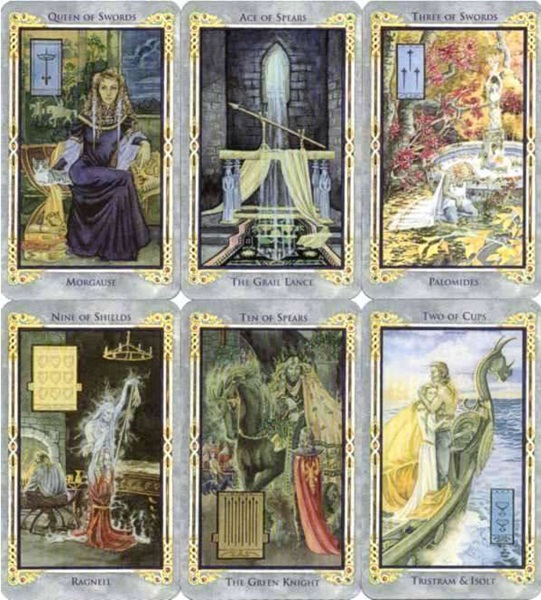
For this game, all the cards we had were dealt from a single Arthurian Tarot Deck for the evocative imagery, of Camelot in crisis with flawed heroes and mystical forces at play. For anyone thinking about doing a similar system, I’d recommend find the deck that best suits the feel you’re going for as that’s the strength of the Tarot decks – the images spark imagination and plot ideas. Second, have a codified guide that is general but still keeps the use focused for use of the major arcana.
I haven’t playtested using a normal deck of cards, but here’s my plan should I ever do this. It’s easier for games with limited stats, like Mork Borg but not impossible for the standard 6 stats of other games, to align the suits to fit the stats. Psyche would be for anything to force will or resist will etc. Face cards would be a flat 10, which if included would really skew towards higher results but that’s kind of the point – the cards are there to make a significant difference when needed. There’s a certain swagger and recklessness you can get away with when you literally have a good card up your sleeve to save your character from an otherwise certain doom. I’m thinking of using this for a Pirate Borg one shot later this month.
Boardgames
While seeking out ways to make Settlers of Catan fun once more, I came across some really interesting house rules. One of them was using a deck of cards, with each player having a hand of 2 through 12, instead of rolling so one could be more tactical in how they played their cards. There were a few other bits to it, but try as I might, I can no longer find the article or what I wrote down about it. My best guess would include things like when you are down to your last two cards that you would be able to refresh. It also makes the 7 card way more valuable. Some games like the excellent and simple Get Bit and What the Heck? already use a mechanic like that.
There are far more games out there released since 1991 that have used playing cards and Tarot decks as part of the mechanic, far more than I have time or resources to try out, so if anyone wants to share their experience, I would welcome it in the comments.
Discover more from A Geek for All Seasons
Subscribe to get the latest posts sent to your email.
 A Geek for All Seasons