
From the same studio that brought us the multi award winning Coyote & Crow RPG (and set in the same universe), Wolves also seeks to be a fun game while also giving voice to Indigenous creators. A buddy backed it and I got to play it recently and it is a game I might seek to add to my collection.
The Pitch
3 to 6 players take on the role of community leaders responsible for managing resources for your own community as well as making sure that others do not go hungry, now and through the hard times of the winter approaching. Each community has their own resource deck that is strong in one resource, moderate in another, and weak in the final, plus filler cards that represent a useful resource in reality but does nothing to fill the stomachs of your board game community. If any community does not have their needs met (3 of each resource), either by gathering them or by receiving them from others, then everyone loses. If all needs are met through to the final round, the highest victory points wins.
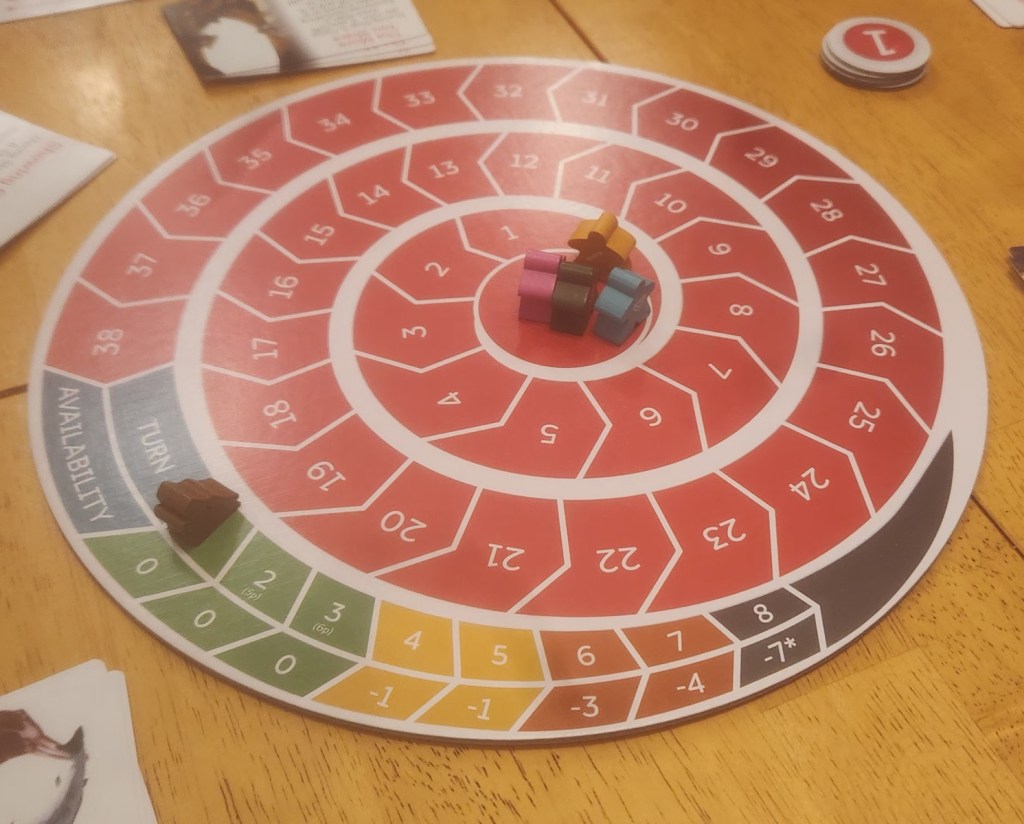
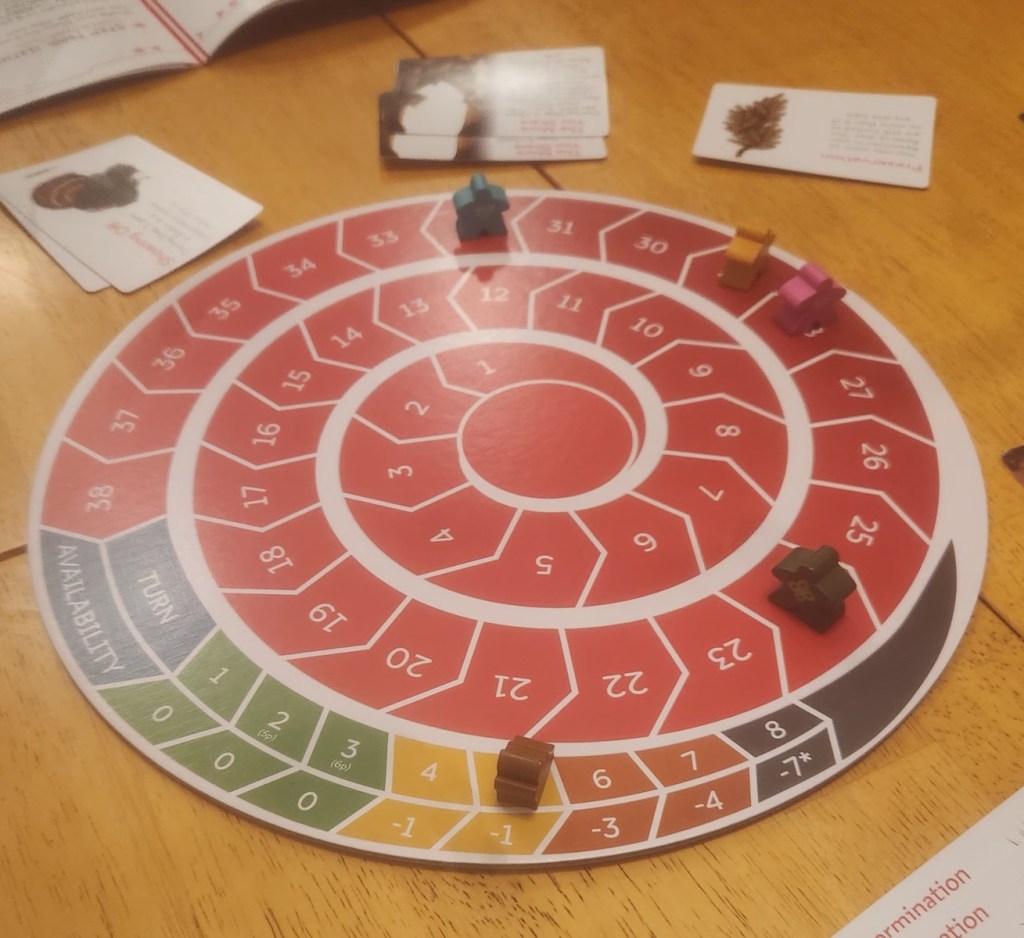
Complicating the matters is the randomness of the resources draw. You can freely draw resources until you draw the third wild card (the Leader cards). If you draw that third Leader, all three of them are discarded and you don’t get to gether resources next turn, a devestating result if you don’t have enough resources saved up. As winter is entered, resources are removed from your deck and the game, until 16 have been removed by the final turn.
For the complete (and free) rules, you can find them on drivethrurpg.

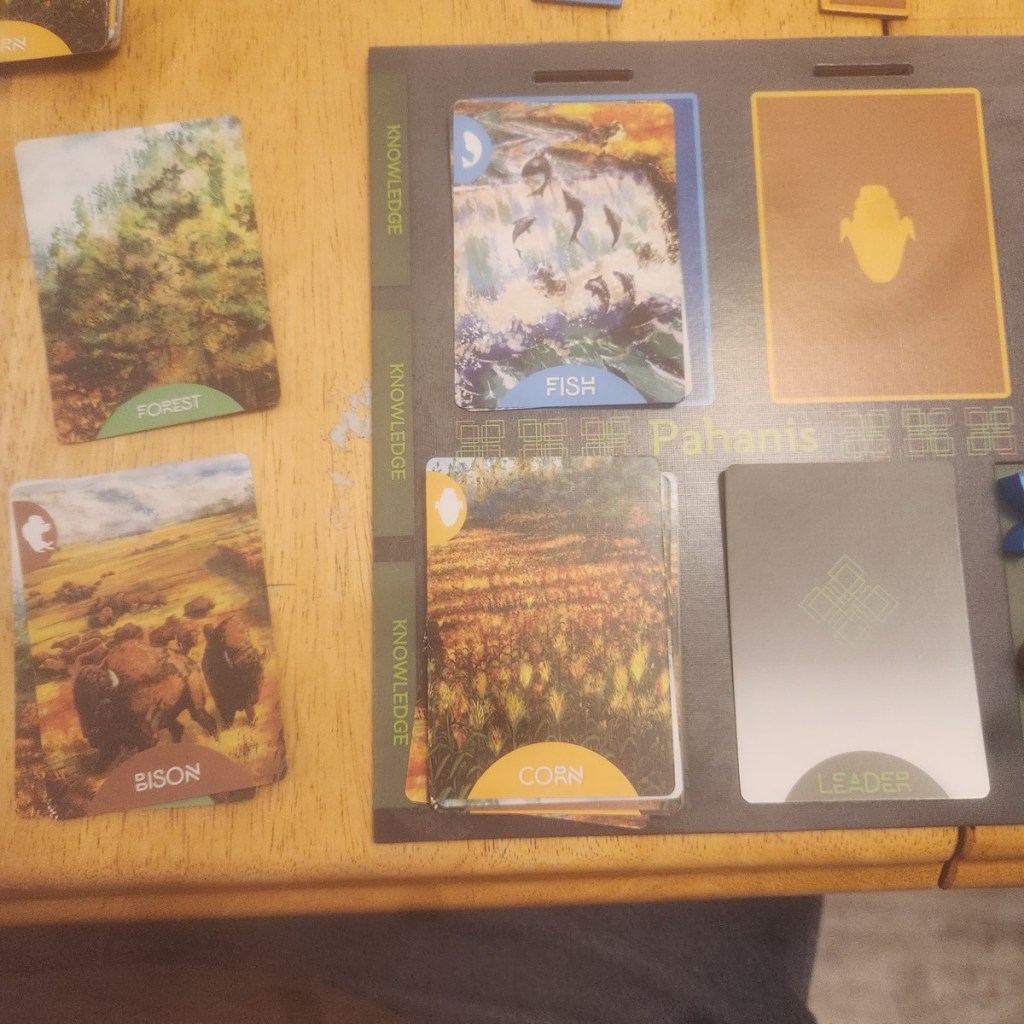
Good chunky wooden tokens for saving up to 4 of a resource, to be used for points or gifting for even more points – as long as you have enough for your people first.
What I Liked
I’m a fan of co-op games and supporting 5-6 players and this certainly meets those objectives. If one is particularly petulant, they could totally sabotage the game and force a group loss rather than see someone else have the most victory points, but I feel like the player who would do this would also be the least likely to play a game like this. It also rewards players who help others but if you gift another player too much, they also get victory points (2 per resource for gifting, 1 per resource traded in at turn end) so it’s a bit of a balancing act.
The card mechanic for gathering is a bit random but I didn’t mind that. The risk of drawing that third Wild Card Leader and the choice of playing it safe even if you don’t have enough resources for your community or push your luck for as many resources as you can. The randomness of the draw might result in getting shorted with two Wild Cards at the start of the draw or being able to draw almost all your resource cards if two Wilds are buried near the end. I had both happen to me but the flow of trade between players eased those hig and low points. We did do a quick check to make sure that we did have a set of Communities that were strong in each of the resources.
It has a clear end game and you see it coming. You have opportunity to prepare for the worst by stockpiling and building up the Knowledge that allows you special abilities for things like extra storage, generating extra resrouces under certain conditions, etc. An interesting twist is that the number of game turns is based on how many are playing the game so I look forward to seeing how that plays out with a full six players.
Once you get into it, the mechanics begin to make more sense than what you would give byu just reading it and overall simple in mechanics but more complex in how they all fit together. It was a pretty quick learning curve and some tactics appear quickly like the advantage to going later in the round.
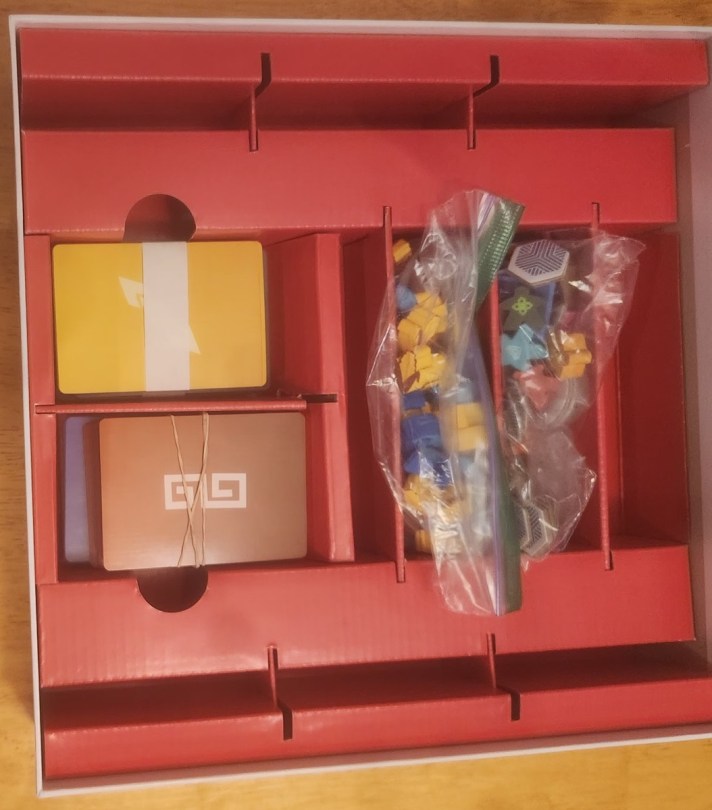
I’m also a sucker for a nicely designed box for storage. Some thought went into this one.
With This I Took Issue
The aethetics are nice and tranquil, though some are a little too similar to each other between player mats for a clear difference. Of the six point markers, we went with the four that were the most distinct.
Though I respect the creative choice to use ficitonal Communities and remove it from real world people, it does lead to some dissonance. A couple of the players had some related knowledge and were qucik to point out that real world communities would be unlikely to have access to bison and corn or fish and corn and so on. It does say in the instructions that each of these represent more than just the pictured animal and plants and I totally get why they went with these distinctive resources but could they not have used three different animals instead of just bison? Or maybe some background info about how bison and corn were vital to specific real world aboriginal communities. Then there is the ‘junk’ card of forests which would seem like a pretty significant resource but it’s not one of the ones required as a game mechanic to support your community.
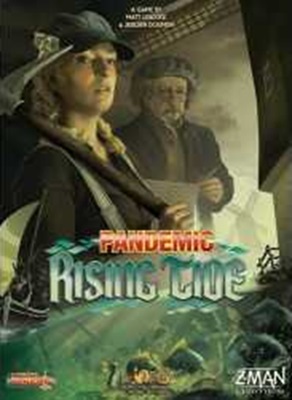
They make connections to the world of the Coyote & Crow TTRPG and even place it within that history, but I believe they missed out on an opportunity to discuss examples of real world aboriginal groups mirrored (in part at least) or at least inspired these fictional ones. Pandemic has a few games that they call part of their historical series, like Rising Tides that provides info on the great engineering wonders being built to win the game or Iberia that has little background facts related to the special event cards and options for making the outbreaks better reflect their real world patterns of spreading. I really like that educational aspect of those games and have to admit that I learned a lot from board games and TTRPGs about history and many a random fact.

Final Thoughts
Yes I would play again and I will likely see about getting a copy myself. It ticks many things I’m looking for in a game these days – clear end conditions that end in under 2 ish hours, up to 6 players, quick to understand mechanics, and that even when falling way behind in points there still remains opportunities to catch up later and there are even advantages to being in last place. I can see it having a fair amount of replayability over the long run but not the kind of game that has enough variability to support playing more than a couple of times a year.
Discover more from A Geek for All Seasons
Subscribe to get the latest posts sent to your email.
 A Geek for All Seasons
One thought on “Playing – Wolves (2024)”