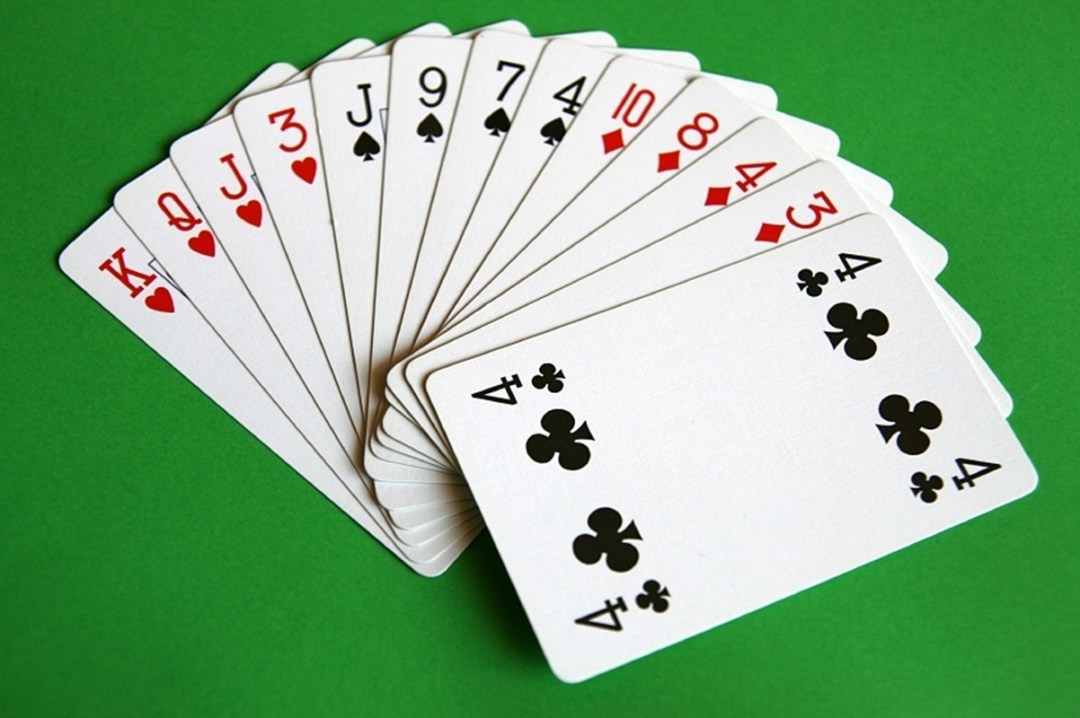
So during my improvised Pirate Borg / Shadowdark ttrpg mash up over the holidays, I pulled out a deck of cards for a visual tracking of creature’s being attacked and damage dealt to them. It got me to thinking about the different ways I’ve used a simple dollar store deck of cards during a game so far and brainstorming on a few more.
Hit Point Trackers
As the rag tag band of heroes played by my nephews crashed their way through the classic Rotblack Sludge dungeon, I pulled out some cards to display how many enemies there were.
- 3 Hearts was a guard trapped under a bookshelf, so I tipped it sideways as a reminder
- Jack Clubs was the unleashed demon
- 4 Hearts and 5 Hearts were two other guards behind cover beyond the room so they were off to the side
As they dealt damage, we placed a d6 on the card to indicate how much damage had been dealt. I can totally see this being combined with numbered minitures with hit point tracking on cards at the side for the more tactile players rather than one player (or the DM) tracking for all of them.
For OSR games with smaller pools of hit points, I could totally see using cards to telegraph the difficulty by choosing cards with pips equal to the hit points or threat level.
Initiative
Years ago I tried this out for a D&D game to mixed results. I grabbed four cheap matching card decks and each player got a specific card to represent them. Then they got additional copies of the card based on their initiative bonus i.e. a 16 Dexterity has a +3 so they got three cards (Jack of Hearts). Then with cards for the enemies (one set of cards for a group rather than one card each unless it was for a significant named character) we built an initiative deck of all the cards representing characters / creatures. I color coded them so that red cards were PCs and black cards were NPCs / creatures and it would be quick to determine which side was going. Then shuffle and start dealing from the top. The first time a character’s card comes up, that’s when they go. All the other cards are just there to improve the probability of one of their cards coming up. We didn’t have anyone with a negative initiative modifier but it would have been handled by ignoring all but the last card. As these were cheap dollar store cards, I treated them as disposable and wrote PC names on them. Once everyone has gone, reshuffle all the used cards back in and start again.
It was chaotic but I liked it. You didn’t know who was coming up next so preplanning was minimal and that was one of the main reasons we stopped using it and went with the more traditional initiative roll.
Years later, I finally managed to get a one shot game of Deadlands to the table and discovered how they used cards for initiative. Characters get dealt a card from the deck, bonus cards if they have an Edge that says so. Extras (the nameless dozens) got one card to represent them. Then the GM counts down through the cards from Ace high to the two. If there was a tie, suit resolved from Spades (high), Hearts (2nd), Diamonds (3rd), and Clubs (last). Jokers were wild and added a bonus to dice rolls by that character for their action when they decide to enter into the initiative.
It actually worked really well and fit the genre of gunfighters jockeying for who would go first.
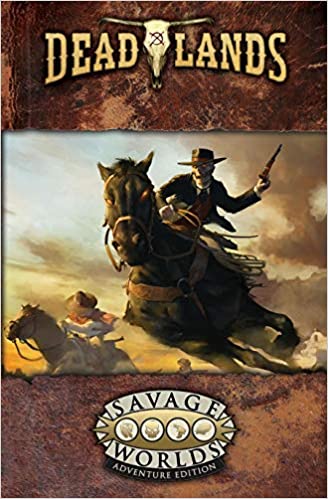
Side note – Years ago I had picked up the 1996 version of Deadlands before it was ‘reloaded’ as Savage Worlds, and it used cards way more with magic users having to build poker hands to cast spells and create characters. I never managed to get it to table but I remained interested in the weird west setting and the notion of using hands of cards for action resolution …
I’ve actually got way more to say but I’m gonna break this up into a few smaller posts …
Discover more from A Geek for All Seasons
Subscribe to get the latest posts sent to your email.
 A Geek for All Seasons
One thought on “Game Theory – Playing Cards as Gaming Tools (pt.1)”