Daybreak came across my feeds a couple of years ago with a BackerKit campaign. Coming from game designer Matt Leacock (Pandemic, Forbidden Desert, and about 40+ others), it had my interest. Living in Canada, the shipping cost has usually made me opt for PDF materials for RPG resources but for this one it was actually not that bad. Though there were many similarities to Pandemic, it looked unique enough in mechanics and less likely to show up at my FLGS so I backed it.
The Pitch
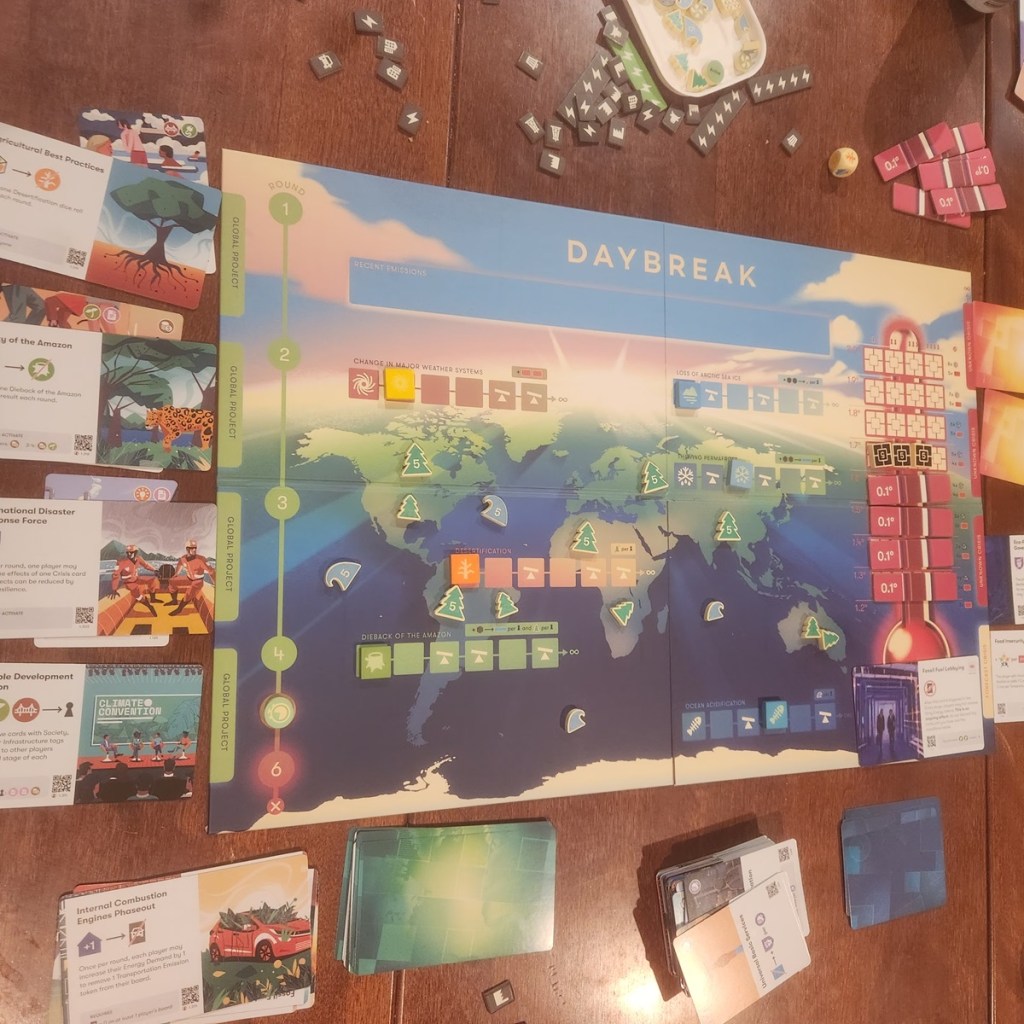
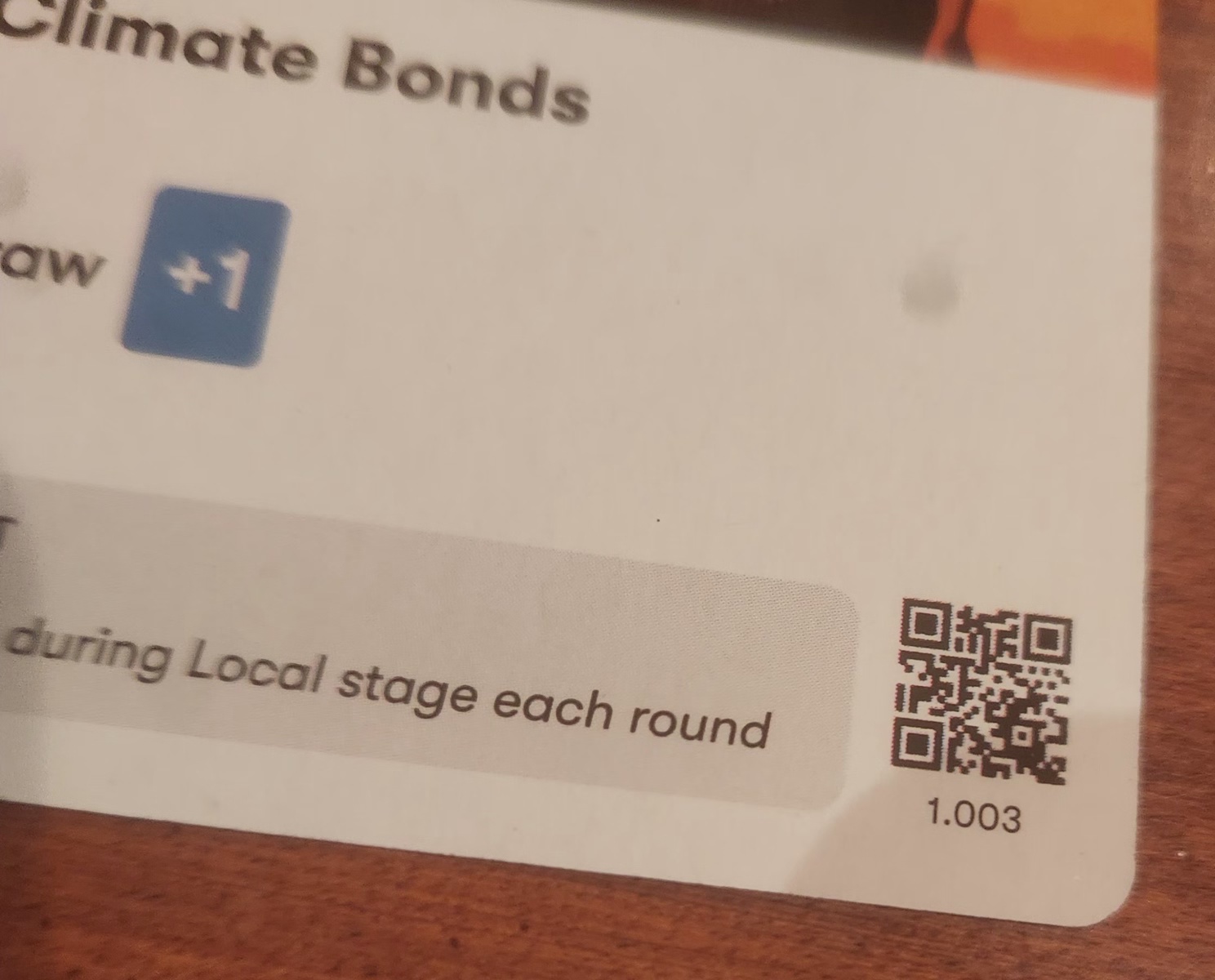
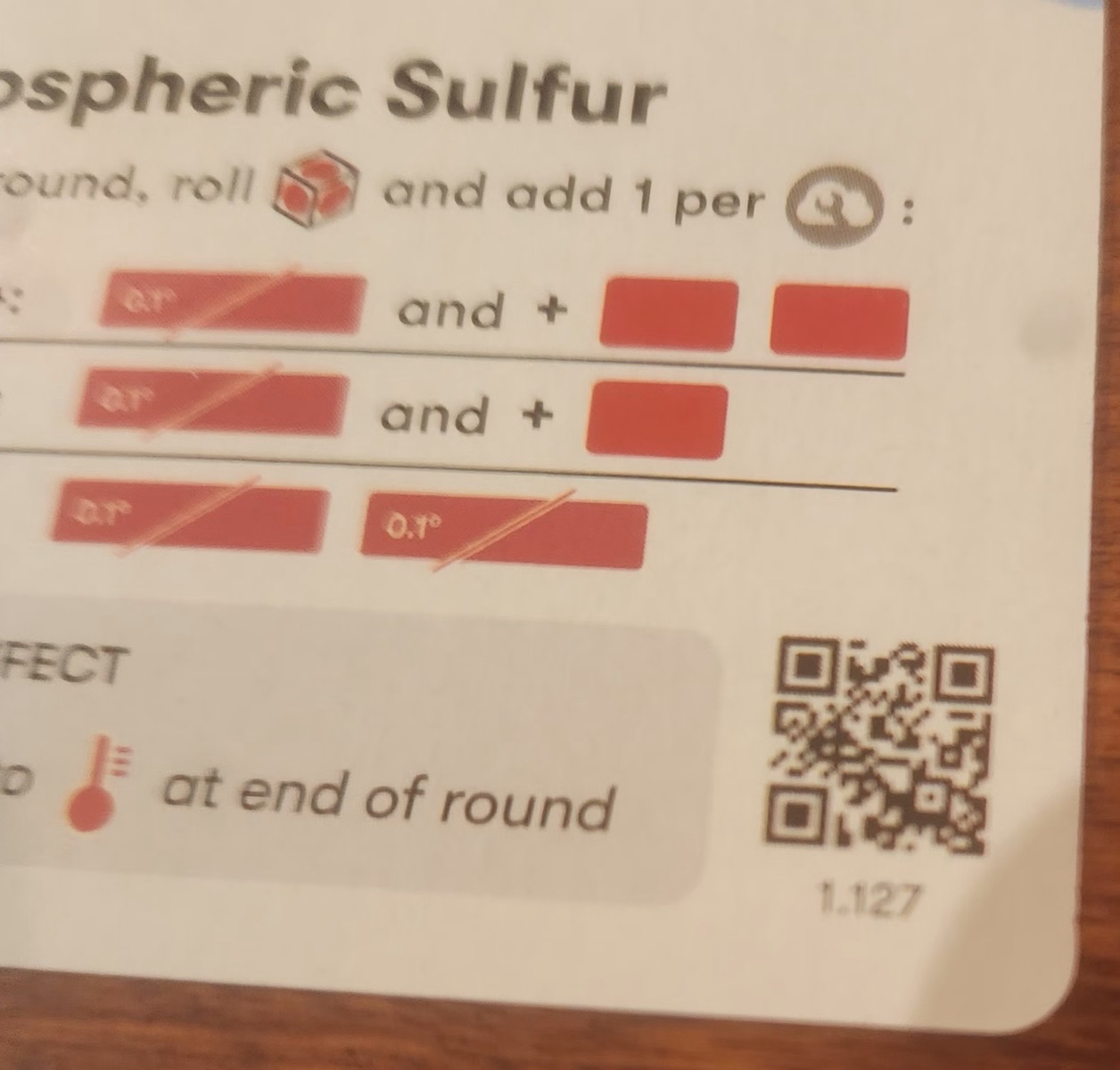
Players take on the roles of global powers who must work together to deal with threats to the climate, reduce carbon emmissions, and develop technologies and social solutions before too many tipping points end the game. Yes, there is a very upfront call for climate action in the game and even the materials are primarily recylcled and deliberately lacking in plastic even for the packing. The cards themselves have QR codes that link to game mechanical details and further information on the real world initiatives that the cards were based on.
What I liked …
The interesting mechanic is the use of the cards. Each card can be used in one of three ways – it’s action, for the tag, or as a discard to fuel other cards or to nerf crisis cards. This is where most of the analysis paralysis is going to happen, that this card might be just as useful supporting another card to reduce carbon but it’s own primary use would allow you to pick up several more cards each turn and making matters worse, there is a crisis card that needs that specific tag to reduce the incoming harm next phase.
The physical design is really nice. Good chunky wooden pieces, clear use of icons and symbols, illustrations meeting the optimistic theme, and nice quality cardboard. My big complaint is in the use of colours for the player boards. With four player boards, the colour choice is dark green, light green, dull red, and dull orange. Fortunately it isn’t a major thing, that once things are set up, the colours aren’t very important (and when we mixed up the two green boards, it was early enough in the game to swap them around). There’s a legally blind player regularly at my table so this sort of thing has become something I’m more aware of (plus the rest of us getting stronger eyeglass prescriptions each year).
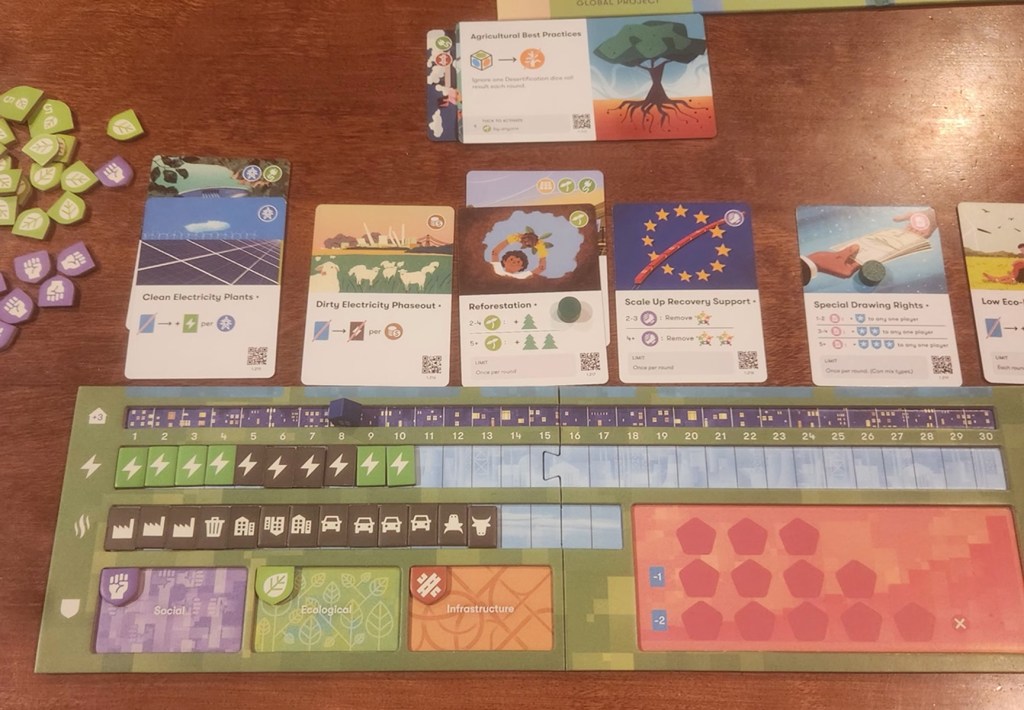
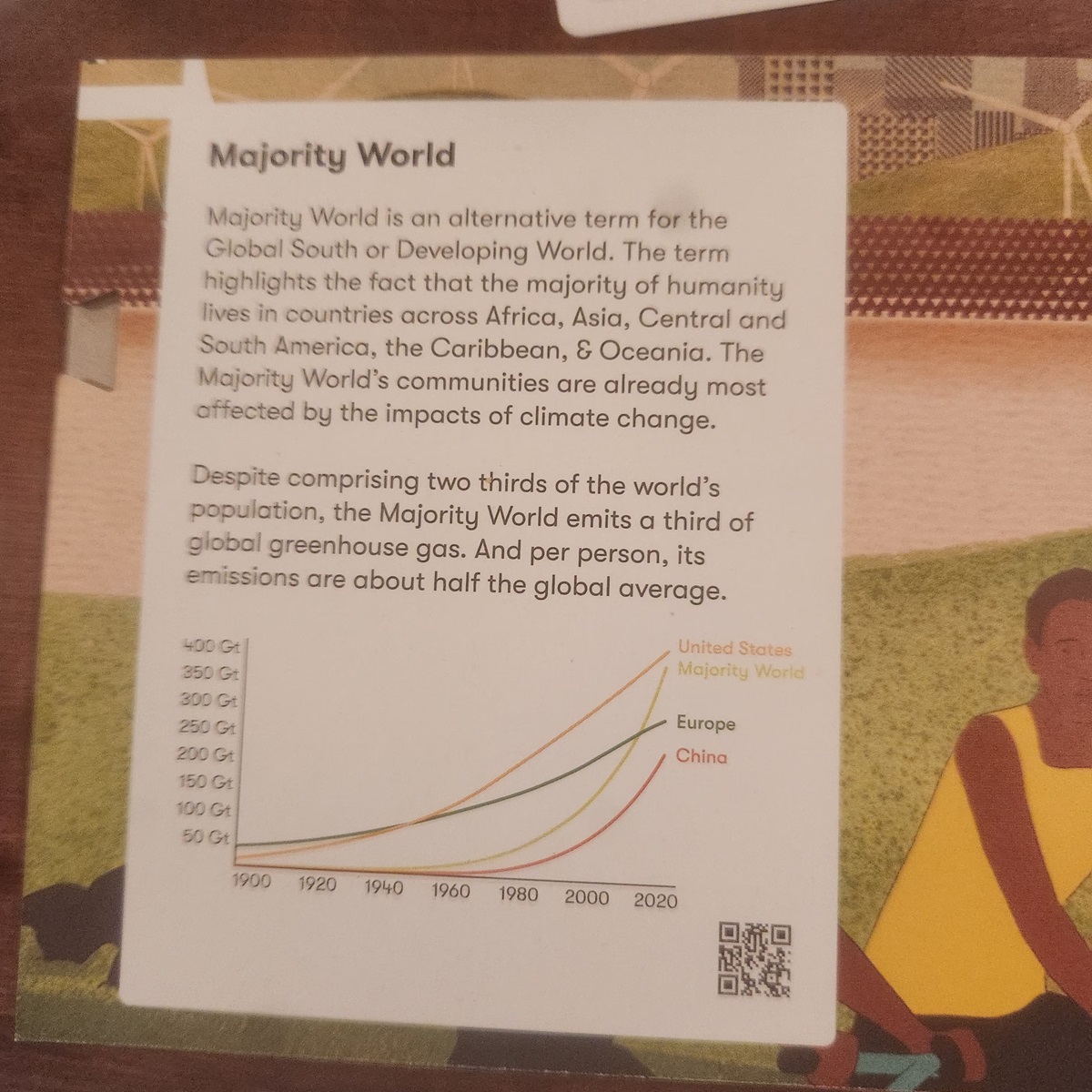
I’m also a fan with a clear endgame. This game ends either after 6 turns or hitting one of the fail conditions ala Pandemic or Forbidden Island. It plays only up to four, but I bet it could have gotten up to five by dividing up the Majority World into smaller blocks like India or Russia or Africa. It plays longer than Pandemic and calls for more attention paid to the card play than a casual game.
A Few More Thoughts …
So far I’ve managed to bring it to table twice and I’m looking forward to playing it again. First time through we had a table of four and managed to get most of the rules correct. Second time was a table of two and relearning it again, but I’m convinced that this game is better at four. There are some recommended set ups to adjust the difficulty, a welcome thing as once things start going badly, it can cascade into a death spiral pretty quickly in my experience. I’m looking forward to playing it again later this year. The conversations generated as we played found the emerging patterns to be similar to several real world problems and approaches, sometimes close enough to feel a little bit like a parody as some tech cards got discarded in favor of others or due to a crisis forcing it’s removal.
Finally, for some reason I’m reminded a lot of Power Grid and it might be because of the balance between managing resources and building up the card engines. Similar to Spirit Island, player turns are simultaneous though for the first couple of turns we made a point of going one by one. After that, we tended to talk to each other for the Global Projects (good things to reduce harm) and for sharing what each player needed (cards to trade, who could deal with the crisis card, needing assistance for a project, etc.) but otherwise very much working individually on our own player board. In a four player game, there was far more synergy in how different developing card stacks allowed us to tackle problems. There’s also elements of Terraforming Mars (like a giant thermometer and other climate trackers) and some other games listed as inspiration in the acknowledgements, but it still stands on it’s own.
Overall, I’d recommend it for folks who like a co-op game that has some crunch to building up combos aka engine builders.
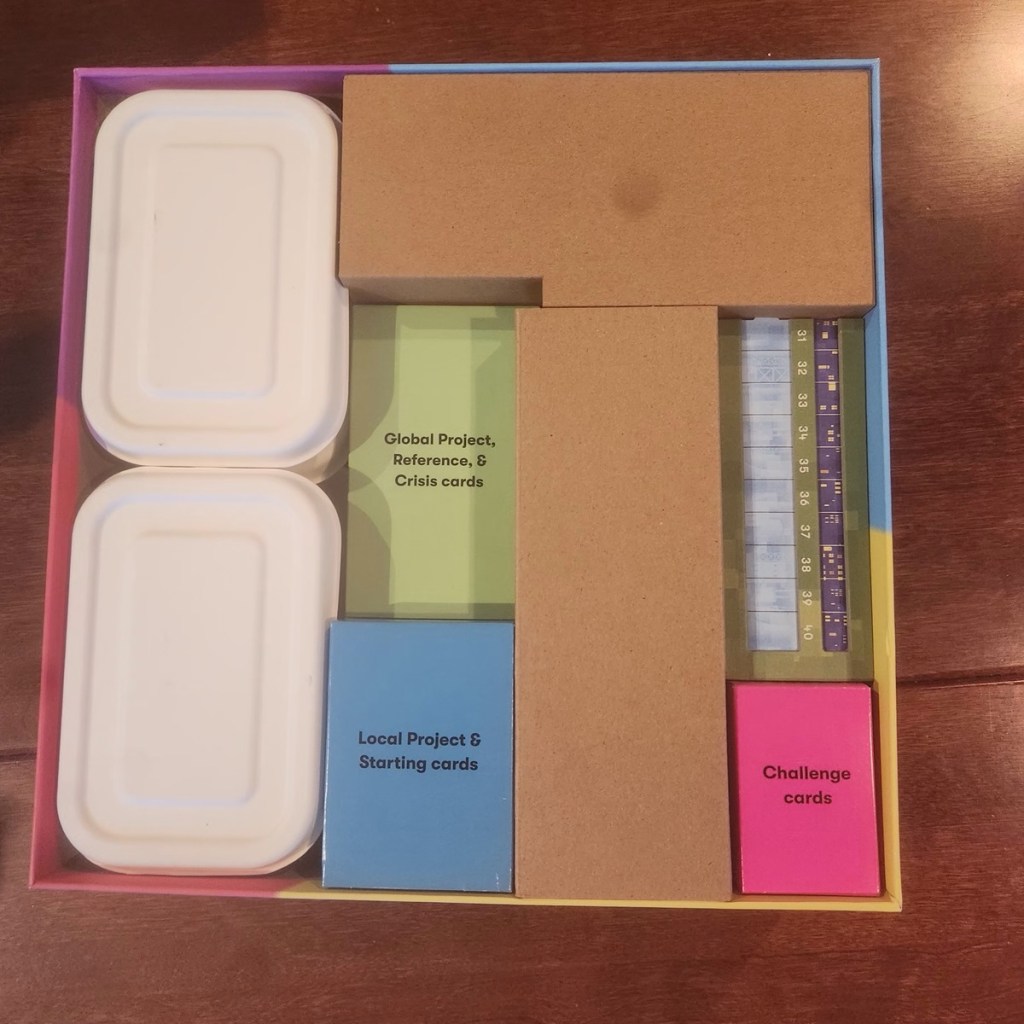
Also, check out that sweet ergonomic content design!
Addendum
I’ve played it again with three people. We did a bit of a house rule to allow for discarding cards from the stacks that had not been used yet. It seemed to still be in line with what would be discarded as a penalty and created a slightly more flexibility to survive in those early turns and get the engine going, thematically stripping resources from initiatives due to crisis management. We didn’t allow for pulling cards from stacks to tuck and the tag wasn’t allowed to contribute to anything before being discarded. At the time, it felt right and we still only barely won in the final round, but we will see how it goes for future play throughs …
Discover more from A Geek for All Seasons
Subscribe to get the latest posts sent to your email.
 A Geek for All Seasons
One thought on “Playing – Daybreak”